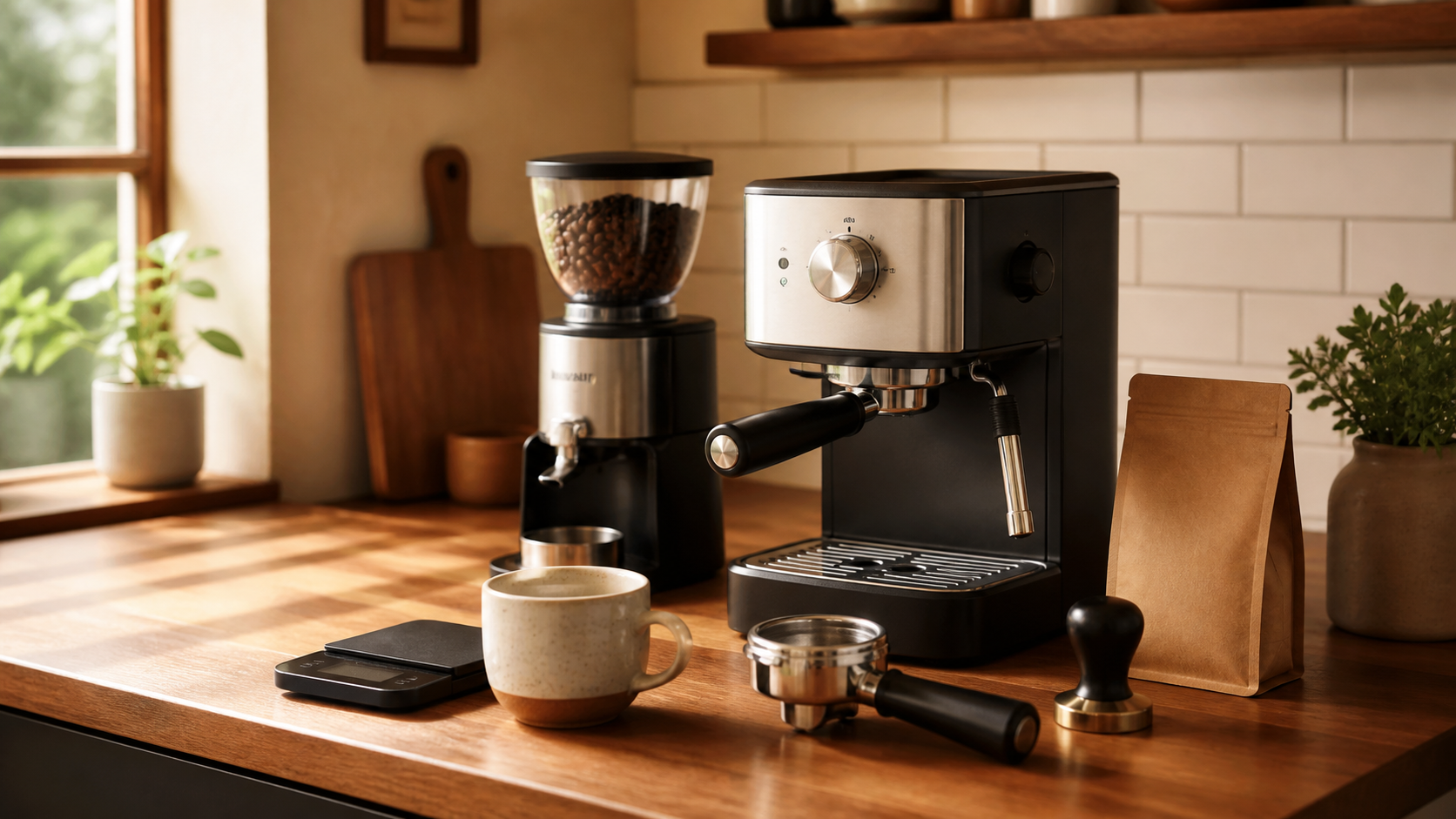
A good beginner espresso setup under $500 is possible, but only if you spend the budget in the right order. The common mistake is buying the biggest-looking machine and leaving no room for a grinder, scale, tamper, cleaning supplies, or fresh beans.
This guide gives you a practical starter path. It is built for home coffee drinkers who want real espresso or better lattes without drifting into expensive hobby territory on day one.
Quick Setup Plan
| Item | Target Budget | Why it matters |
|---|---|---|
| Beginner espresso machine | $120-$300 | Creates pressure and steam; choose simple and reliable before fancy. |
| Espresso-capable burr grinder | $120-$220 | Controls shot flow more than most beginners expect. |
| Coffee scale with timer | $15-$35 | Lets you repeat dose, yield, and brew time. |
| Tamper and basic puck prep | $15-$40 | Improves consistency and reduces channeling. |
| Cleaning supplies and beans | $20-$50 | Fresh beans and clean gear matter immediately. |
Best Overall Path: Compact Machine Plus Separate Grinder
The strongest under-$500 route is usually a compact beginner espresso machine paired with a separate burr grinder. A separate grinder is less convenient than an all-in-one machine, but it gives you better upgrade flexibility and fewer compromises.
Best Overall Path
Compact Beginner Espresso Setup
Choose this path if you want to learn real espresso without buying a machine that traps you into a weak grinder. Prioritize a machine with a normal portafilter, a usable steam wand if you make milk drinks, and simple controls.
Budget Path: Manual Espresso Machine Plus Hand Grinder
If your budget is tight, a capable hand grinder can protect shot quality while keeping cost down. Manual grinding for espresso takes effort, but it often beats cheap electric grinders that cannot adjust finely enough.
Lowest Cost
Manual Grinder Espresso Path
Choose this if you are patient, brew one or two drinks at a time, and care more about cup quality than speed. Skip it if you need fast weekday lattes for multiple people.
Convenience Path: All-in-One Machine
An all-in-one espresso machine with a built-in grinder can make sense if counter space and simplicity matter more than long-term upgrade flexibility. It is not always the best value, but it can reduce decision fatigue for a true beginner.
Most Convenient
All-in-One Beginner Espresso Machine
Choose this if you want fewer separate purchases and a cleaner counter. Skip it if you already know you will want to upgrade the grinder later.
What Not to Buy First
Do not spend the whole budget on the machine while using pre-ground coffee. Do not buy a blade grinder for espresso. Do not overbuy accessories before you can pull a repeatable shot. A scale and grinder will help more than a drawer full of shiny tools.
Simple Starter Recipe
- Start with 16-18 grams of fresh espresso-roast coffee.
- Aim for about twice that weight in liquid espresso.
- Try to reach that yield in roughly 25-35 seconds.
- If the shot runs too fast and tastes sour, grind finer.
- If it barely flows and tastes bitter or harsh, grind coarser.
Related Guides
Start with the beginner espresso machine guide, then compare grinder options in the beginner coffee grinder guide. If your shots taste off, use the espresso dial-in guide.
FAQ
Can you make good espresso under $500?
Yes, but the setup has to be balanced. A modest machine with a capable grinder usually beats an expensive machine paired with stale pre-ground coffee or a weak grinder.
Should the grinder or machine get more of the budget?
For most beginners, protect the grinder budget first. Grind size controls shot speed, extraction, and repeatability, so a better grinder makes a basic machine easier to use.
Do you need a scale for espresso?
Yes. A small coffee scale is one of the cheapest ways to improve espresso because it lets you measure dose, yield, and timing instead of guessing.