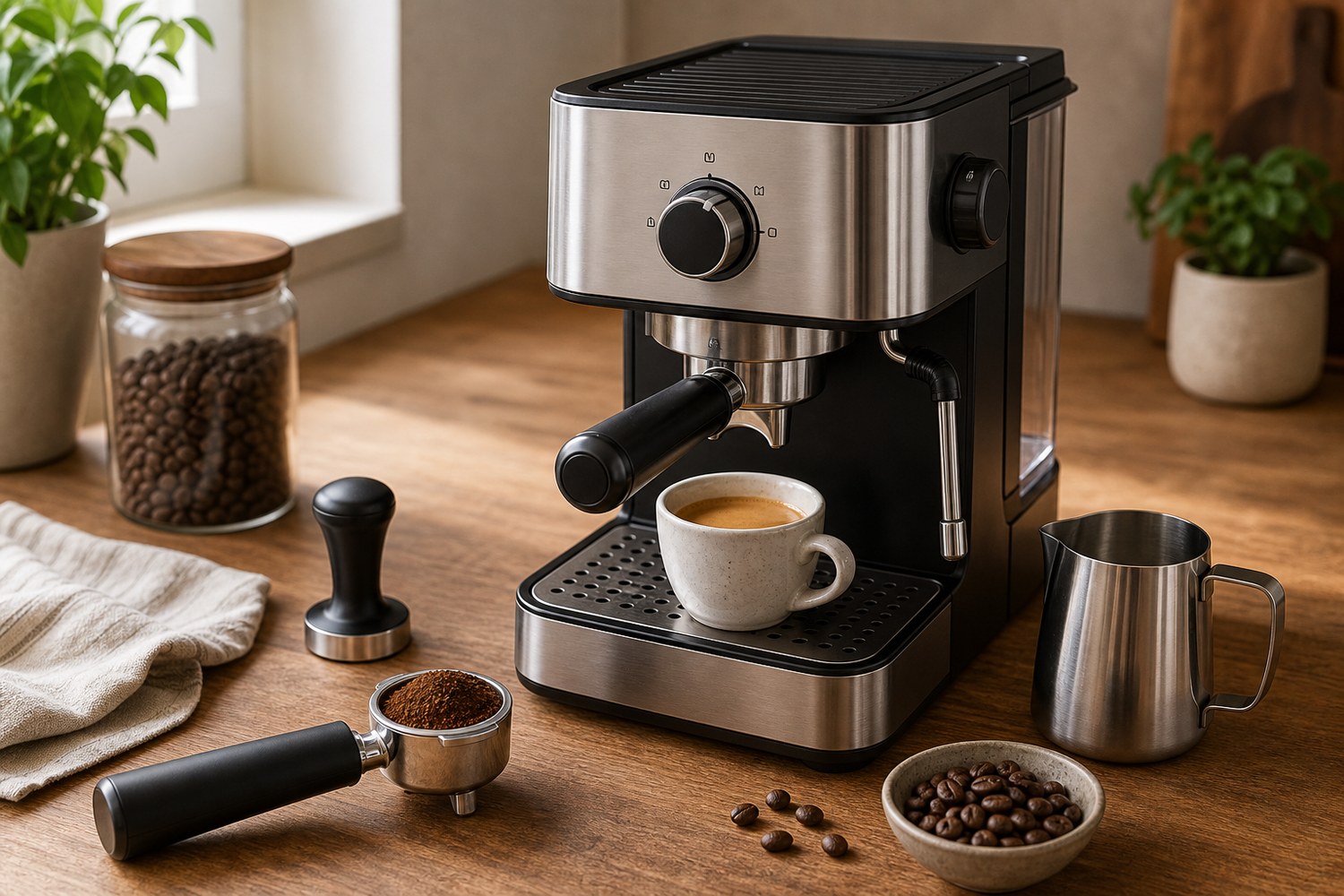
Buying your first espresso machine is exciting, but it is also where a lot of home baristas waste money. The machine matters, but so does the grinder, the milk system, the cleaning routine, and how much learning you actually want to do before your first decent latte.
This guide focuses on beginner-friendly espresso machines that make sense for real home kitchens. Some are simple and automatic, some give you room to learn, and some are best only if you are willing to buy a proper grinder alongside them.
Quick Picks
| Pick | Best For | Grinder | Learning Curve | Link |
|---|---|---|---|---|
| Breville Bambino Plus | Best overall beginner machine | Separate grinder needed | Easy to moderate | Check Amazon |
| Breville Barista Express | Best all-in-one starter setup | Built in | Moderate | Check Amazon |
| Gaggia Classic Pro | Best upgrade path | Separate grinder needed | Moderate to hands-on | Check Amazon |
| Philips 3200 LatteGo | Best convenience pick | Built in | Very easy | Check Amazon |
| De’Longhi Stilosa | Best low-budget starter | Separate grinder needed | Moderate | Check Amazon |
How to Choose Your First Espresso Machine
The best beginner espresso machine is not always the cheapest machine or the one with the biggest pressure number on the box. A good first machine should match the drinks you make most, the amount of practice you are willing to put in, and whether you already own a grinder that can grind fine enough for espresso.
Semi-Automatic vs. Super-Automatic
A semi-automatic machine gives you more control. You grind the beans, dose the basket, tamp the coffee, start the shot, and steam the milk. This is the better path if you want to learn real espresso and improve over time.
A super-automatic machine handles most of the process for you. It grinds, doses, brews, and often froths milk with minimal effort. The espresso may be less customizable, but the convenience is hard to beat if you mostly want fast cappuccinos or lattes before work.
Do You Need a Grinder?
For real espresso, yes. If your machine does not include a grinder, plan for a capable burr grinder. Pre-ground coffee usually goes stale quickly and may not be ground correctly for your machine. A weak grinder can make even a good espresso machine frustrating.
Think About the Full Setup Cost
Your first setup may need more than the machine. Budget for a grinder, scale, tamper, milk pitcher, knock box, cleaning tablets, descaler, and fresh beans. A cheaper machine with the right accessories can be better than an expensive machine paired with poor coffee and no scale.
Best Overall Beginner Pick
Breville Bambino Plus
The Breville Bambino Plus is one of the easiest beginner machines to recommend because it heats quickly, takes up little counter space, and can make solid espresso without demanding a huge learning curve. It is especially appealing if you want milk drinks because the automatic milk texturing is beginner-friendly.
Choose it if you want a compact machine that can grow with you. Skip it if you want a built-in grinder or prefer a more traditional, heavy-duty machine.
Best All-In-One Starter Setup
Breville Barista Express
The Breville Barista Express is popular because it gives beginners a machine and grinder in one footprint. It is not the smallest option, and the built-in grinder has limits compared with a separate espresso grinder, but it is convenient and approachable for someone building a first setup.
Choose it if you want fewer separate purchases. Skip it if you already own a good espresso grinder or want the flexibility to upgrade machine and grinder separately.
Best Upgrade Path
Gaggia Classic Pro
The Gaggia Classic Pro is a classic beginner-to-enthusiast machine because it has a more traditional feel and a strong upgrade path. It is better for someone who wants to learn espresso rather than someone who wants push-button convenience.
Choose it if you are comfortable buying a separate grinder and learning technique. Skip it if you want automatic milk frothing or the easiest possible workflow.
Best Convenience Pick
Philips 3200 LatteGo
The Philips 3200 LatteGo is for the coffee drinker who wants espresso-style drinks with minimal effort. It grinds beans, brews drinks, and handles milk automatically. You trade away some manual control, but you gain speed and consistency.
Choose it if your priority is fast lattes and cappuccinos. Skip it if you want to learn puck prep, shot timing, and traditional espresso technique.
Best Low-Budget Starter
De'Longhi Stilosa
The De’Longhi Stilosa can be a reasonable entry point if your budget is tight, but it comes with compromises. It can introduce you to espresso-style drinks, yet it will not feel as refined or capable as stronger beginner machines.
Choose it if you need to keep the machine cost low. Skip it if you can save for a better machine and grinder combination.
Common Beginner Mistakes
- Buying a machine and ignoring the grinder. Espresso is extremely sensitive to grind size.
- Trusting “15 bar” marketing. Espresso is usually brewed around 9 bars of pressure; bigger numbers are not automatically better.
- Forgetting cleaning costs. Espresso machines need descaling, backflushing where applicable, and regular cleaning.
- Buying too cheap, then quitting. A frustrating machine can make espresso feel harder than it needs to be.
- Expecting cafe results on day one. Even beginner-friendly machines reward practice.
What Else Should You Buy?
If your machine does not include everything you need, start with these basics:
- A capable burr grinder
- A small digital scale
- A tamper that fits your basket
- A milk frothing pitcher
- A knock box
- Cleaning tablets and descaler
- Fresh coffee beans roasted for espresso
FAQ
What is the easiest espresso machine for beginners?
For a semi-automatic machine, the Breville Bambino Plus is one of the easiest beginner choices because it is compact, quick to heat, and friendly for milk drinks. For maximum convenience, a super-automatic machine like the Philips 3200 LatteGo is easier because it handles most of the process.
Do I need a grinder for espresso?
If your machine does not have a built-in grinder, you should budget for a burr grinder that can grind fine enough for espresso. The grinder has a huge effect on shot quality.
Is the Breville Barista Express good for beginners?
Yes, especially for beginners who want a machine and grinder in one unit. It is convenient, widely used, and capable enough for learning. The tradeoff is that separate grinders can offer more flexibility later.
Is the Gaggia Classic Pro beginner friendly?
It can be beginner friendly for someone who wants to learn. It is less automatic than some Breville machines, but it has a strong reputation and a good upgrade path.
Are cheap espresso machines worth it?
Sometimes, but only with realistic expectations. Very cheap machines often make espresso-style coffee rather than the kind of espresso you would expect from a better semi-automatic setup. If you care about long-term results, saving for a stronger machine and grinder is usually smarter.