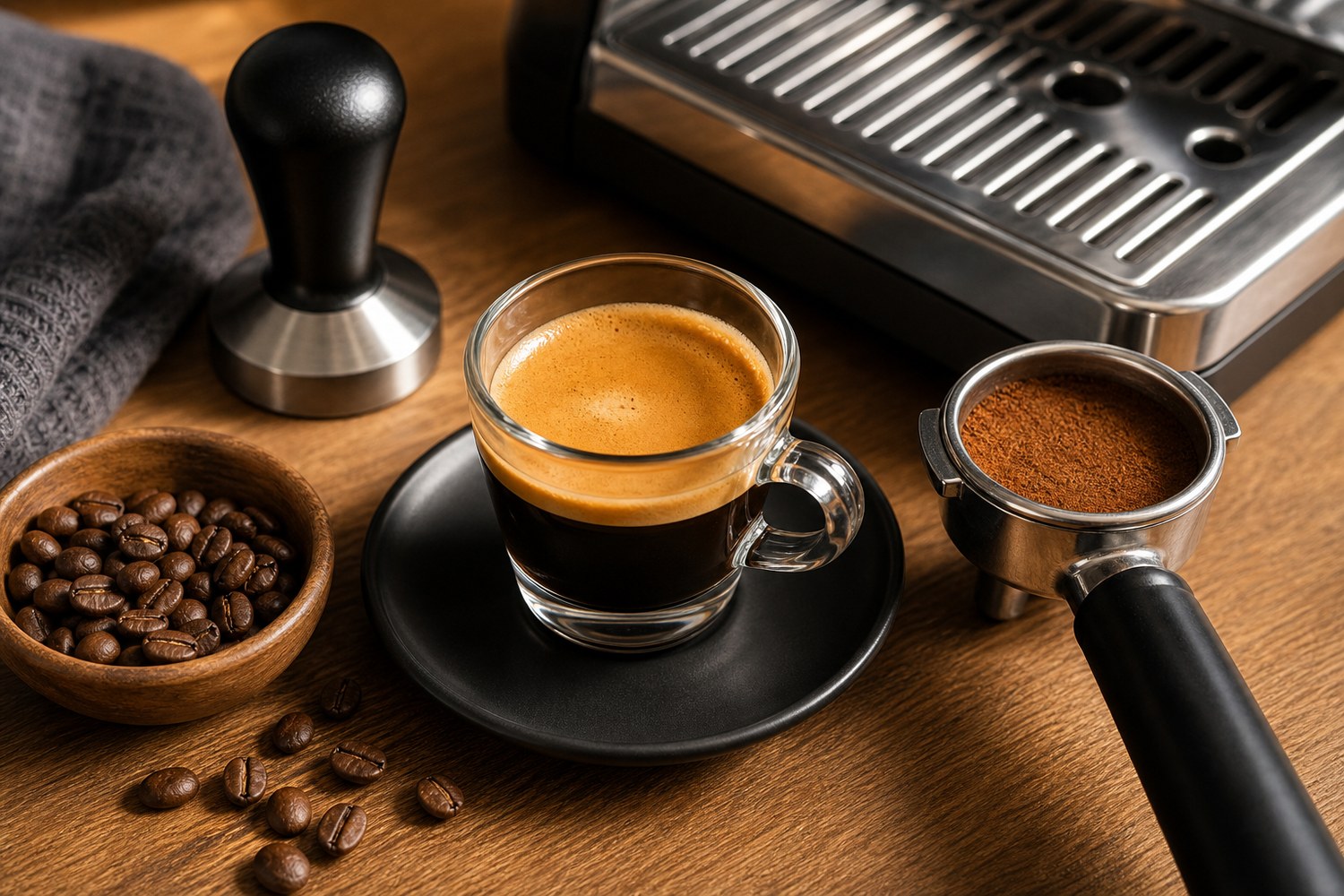
One of the most iconic features of a well-pulled espresso shot is the thick, tan-colored crema that sits on top. But what exactly is crema, how is it formed, and what does it tell us about the espresso? Let’s dive into the science and also address whether crema = good espresso or if it’s mostly cosmetic.
What is Crema?
Crema is essentially a foam of tiny bubbles on your espresso, composed of coffee oils, CO₂ gas, and some soluble compounds. During espresso brewing, hot water under high pressure emulsifies oils and traps gases from the coffee into a colloidal foam. Think of it like the head on a beer, but made of coffee components.
How Crema Forms:
Several factors contribute:
- CO₂ from Fresh Beans: Freshly roasted coffee contains a lot of carbon dioxide gas trapped in the cells of the beans (from roasting process). Espresso’s pressure and heat rapidly releases CO₂ from the coffee grounds. When that gas comes out of solution as water hits the puck, it forms microbubbles. If your beans are very fresh (roasted 2-10 days ago), they’ll have plenty of CO₂ to create crema. If beans are old (say 6+ weeks), much of the CO₂ is gone, leading to sparse crema.
- Pressure and Water Emulsification: The 9-bar pressure forces water and oils to mix in a way they normally wouldn’t (like shaking oil and vinegar). Espresso extracts oils and lipids from coffee; under pressure these oils form little droplets (an emulsion). These droplets coat the CO₂ bubbles, stabilizing them – so the bubbles don’t immediately pop. The result is a stable foam. This is akin to how milk foam is stabilized by milk proteins, here coffee oils stabilize coffee gas bubbles.
- Finely Ground Coffee and Crema: The fine grind of espresso and the compact puck means the water has difficulty passing, creating localized high pressure which helps supersaturate water with CO₂ and then explosive release as it exits the portafilter, forming foam. The fines in the coffee also carry oils to the surface and can contribute to foam formation.
- Solubles and Color: Crema gets its golden-brown color from melanoidins, which are brown compounds from coffee roasting that attach to the bubbles. Also, tiny coffee particles (micro-fines) can get suspended in crema, adding to texture and color. The presence of these microscopic solids and oils give crema a creamy mouthfeel and a bittersweet taste.
Does Crema Indicate Good Espresso?
Yes and no. Crema is a sign that:
- The coffee is relatively fresh (fresh beans produce more crema due to more CO₂). Stale beans often result in little crema.
- Proper pressure extraction happened. Without pressure, you wouldn’t get crema (e.g., Moka pots sometimes make a slight faux crema, but not like espresso). So if you pull a shot and get no crema at all, something could be off (beans very old or grind too coarse or not enough pressure).
However, lots of crema doesn’t always mean a tasty espresso. Robusta beans, for example, create a huge crema head (robusta has more CO₂ and certain compounds that produce crema), but robusta-heavy espresso can taste rough or rubbery. Meanwhile, 100% arabica espresso tends to have slightly less crema, but can taste better. Some older Italian blends add a bit of robusta to boost crema and perceived body, even if it adds bitterness.
So crema quality and quantity is one indicator but not a guarantee of flavor. A golden, stable crema is generally desirable and suggests good technique, but you still need to taste the espresso.
Crema’s Taste:
On its own, crema tastes bitter and a bit ashy. If you sip just crema with a spoon, it’s not pleasant – that’s because it contains a lot of the bitter oils and has trapped some of the less sweet compounds. It’s like foam on Guinness – the head itself is more bitter than the beer. But when mixed with the liquid espresso below, it contributes to the overall flavor and mouthfeel.
Some aficionados will “stir” their espresso or swirl it to mix crema with the shot for balanced taste (since espresso tends to stratify: more intense at bottom, lighter at top with crema). If you drink without stirring, first sip is mostly crema (bitter), then middle is balanced, last sip may be extra intense.
Does Removing Crema Improve Taste? There have been experiments – some baristas will skim off crema and taste espresso. Often, removing crema can make the espresso less bitter and highlight sweet/acidity more, since crema was holding bitterness. But you also lose body and aromatic presence. So it’s subjective. Most serve with crema intact for tradition and complexity.
Crema and Aromatics:
Crema traps a lot of the volatile aromatics from coffee. When you see crema, those bubbles carry aroma compounds to your nose. This enhances the sensory experience of espresso. A shot without crema might taste fine but won’t have the same aromatic intensity when you bring the cup up (since crema is releasing aroma as you drink).
Crema and Freshness:
As mentioned, extremely fresh beans (like 1-3 days post-roast) might produce too much crema – often very bubbly and large-bubbled that quickly dissipates (from excessive CO₂). This can sometimes be a sign to let the beans rest a couple more days. Ideal is a nice tight crema with fine bubbles that persists ~2 minutes or so. If crema disappears in seconds, beans are likely old or something’s off (or it was a very light roast coffee which naturally yields less crema due to chemical composition and less surface oil).
Nitro Coffee and Crema:
As an aside, cold brew on nitro tap has a crema-like head, but that’s due to nitrogen gas, not the same emulsified oils/CO₂ combination. It’s more for texture and appearance. In espresso, the crema generation is natural from the process.
So, Does Crema Matter?
- Visually and texturally, yes – it’s part of what defines an espresso. It gives a fuller mouthfeel and holds a lot of the coffee’s aromatic compounds.
- As an indicator, it can tell you about the coffee’s freshness and maybe blend (robusta vs arabica).
- For taste, it plays a role, but one could argue it’s not the be-all-end-all. A shot with little crema but great flavor (maybe a very low-CO₂ coffee) is still a great shot. And a shot with beautiful crema can still taste bad if extraction was wrong.
In professional barista terms, a good espresso should have a crema that is hazelnut/dark-golden with tiger-flecked patterns (if using a bottomless portafilter, often you see striping) and persists. They often use crema appearance as part of judging a shot’s quality.
Fun Fact – Crema Etymology: The Italian word “crema” means cream – named for the creamy look on top. Early on, some marketing called espresso “caffè crema” highlighting this feature.
Conclusion: Crema is the fluffy cap of an espresso that results from high-pressure brewing of fresh coffee, consisting of CO₂ microbubbles stabilized by oils and coffee compounds. It matters in that it’s a signature of espresso and enhances the sensory experience. While it’s not a direct guarantee of flavor excellence, a good crema often accompanies a good shot. At the very least, it’s an indicator you did some things right (fresh beans, proper pressure, fine grind).
And admit it – it’s also just visually appealing. There’s something satisfying about that honeycomb-colored layer, and watching it mingle with a bit of sugar or seeing latte art contrast against it in a cappuccino. So while chasing crema shouldn’t trump chasing flavor, it definitely matters as part of the holistic espresso experience.