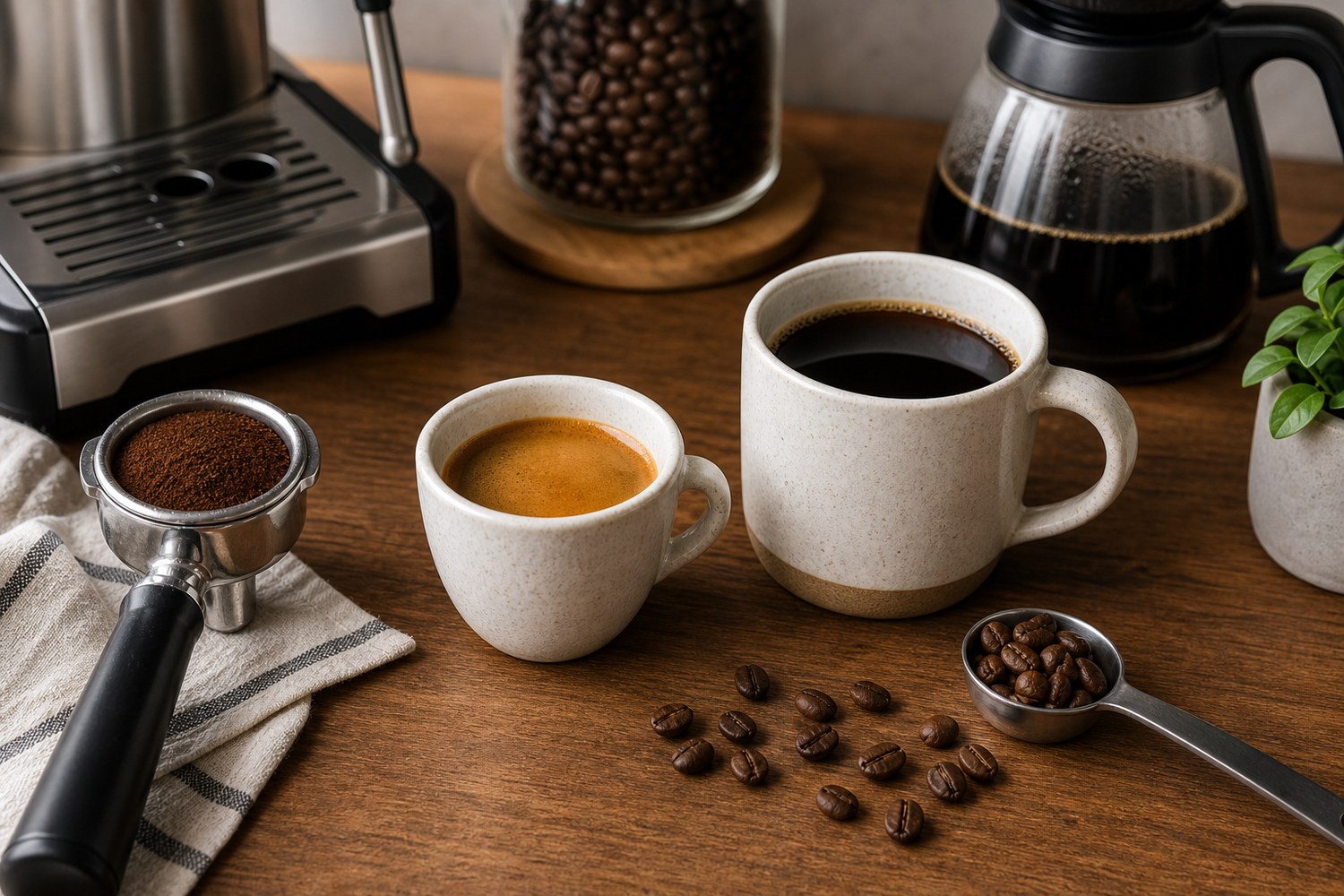
Espresso and drip coffee are two of the most popular ways to enjoy our beloved bean, but they provide very different experiences. Let’s compare them in terms of brew method, flavor profile, caffeine content, and which might suit your preferences.
Brew Method & Volume:
- Espresso is made by forcing hot water (around 9 bars of pressure) through very fine coffee grounds, typically yielding a small concentrated shot of about 1–2 ounces. It’s brewed quickly – a well-pulled double espresso takes ~25-30 seconds. Because of pressure and fine grind, espresso extraction is intense and rapid.
- Drip Coffee (also called filter coffee) involves pouring hot water over medium-ground coffee in a filter, usually by gravity (no added pressure). It’s a slower percolation process, resulting in a larger volume of coffee – a drip brew might be 8–12 ounces or a whole carafe. Brew time is longer (3-5 minutes).
Taste and Strength:
Espresso is highly concentrated. It has a fuller body, heavier mouthfeel, and robust, punchy flavors. You’ll often get a strong hit of the coffee’s essence – caramels, chocolates, fruits, etc., all intensified. The crema on top (that golden foam) contains emulsified oils and compounds contributing to a rich aroma and taste. Because of the quick extraction under pressure, espresso tends to highlight certain flavor components – often the darker, caramelized sugars and acids, which gives it a bold, sometimes bittersweet taste with a syrupy texture.
Drip coffee is more diluted (even if you use the same beans-to-water ratio initially, drip yields a larger volume), so the flavor is comparatively milder per sip. It often has more clarity – especially if using a paper filter which filters out oils and fine particles, resulting in a clean cup. You might taste a broader range of subtle flavors but less intense. For instance, a Kenyan coffee in drip might present a delicate berry note and tea-like finish, whereas as an espresso it might be powerfully winey/berry, perhaps even overwhelming. Drip also usually has more perceived acidity (bright tang) relative to its body, since it’s not masked by heavy concentration.
In summary: Espresso = concentrated, heavy-bodied, intense. Drip = lighter-bodied, clearer, more balanced intensity. Neither is inherently “stronger” in flavor overall – it’s about concentration. Drip’s strength can be adjusted with brew ratio, but sip for sip, espresso packs more flavor punch.
Caffeine Content:
Here’s where many get confused. Per volume, espresso has more caffeine. But because a serving of espresso is small, a single shot (~1 oz) contains roughly 60-75 mg of caffeine. A standard 8 oz cup of drip coffee has about 90-120 mg of caffeine on average. So overall, a cup of drip delivers more total caffeine than one shot of espresso. However, we often consume espresso in double shots or in milk drinks. A double espresso (2 oz) might contain ~120-150 mg caffeine, comparable to a small cup of coffee.
Another way to look at it: espresso roughly 50-75 mg per ounce; drip roughly 10 mg per ounce but you drink more ounces. Ounce for ounce, espresso is about 5 times more caffeinated. But typical serving vs serving, drip edges out or equals a double shot.
For caffeine-sensitive folks, drinking a large 16 oz mug of drip could give you 200+ mg caffeine (especially with strong roasts or large scoops), whereas a single espresso is a quick ~70 mg jolt. Interestingly, because espresso is taken quickly, you might feel its caffeine kick faster, whereas sipping a drip slowly might spread out the effect.
Which Has More Acidity or Bitterness?
Espresso’s rapid brew under pressure extracts lots of coffee oils and compounds quickly. It often has a strong initial acidity (especially if under-extracted or using bright beans) but also can have pronounced bitterness, especially in darker roasts or over-extracted shots. Drip coffee, given its longer brew, can extract more of certain bitter compounds, but the larger dilution sometimes softens the perception. Many find bad drip coffee tastes simply bitter and flat, whereas bad espresso tastes sour or very bitter but in a small dose. Well-made espresso will have a balanced bitterness and brightness in a syrupy sweet shot. Well-made drip will have a gentle acidity and perhaps a mild bitterness on the finish, with a cleaner sweet profile.
Crema vs. No Crema:
Espresso’s hallmark crema doesn’t just look nice – it contains aromatic compounds and oils that add to the sensory experience. Drip coffee has no crema; any oils mostly soak into the brew or get caught in paper filters. This means espresso can have a richer aroma and a slight crema texture upfront, whereas drip is more like a clean infusion without that layer.
Beverage Versatility:
Espresso is often the base for myriad milk-based drinks (lattes, cappuccinos, macchiatos) and specialty beverages (mochas, flavored lattes). Its concentration helps it shine through milk. Drip coffee is usually taken black or with a bit of cream/sugar. Adding a lot of milk to drip can make it feel too diluted (that’s essentially cafe au lait).
If you like adding things (flavored creamers, etc.), drip coffee in a larger volume might be your canvas. If you like pure coffee taste or espresso plus micro-foamed milk, espresso-based drinks offer that intensity to meld with milk.
Brew Equipment and Skill:
A practical difference: making espresso at home typically requires an espresso machine (or at least a stovetop moka or Aeropress espresso-like attempt) and some skill in dialing in grind and technique. It’s a bit of an art and investment. Drip coffee can be made easily with various methods (auto drip machine, pour-over cone, French press albeit that’s immersion not percolation). It’s generally simpler and more forgiving.
Caffeine Perception – Myth Busting:
There’s a myth that espresso is super high in caffeine. Again, per milliliter yes, but a single shot won’t usually surpass a full cup of coffee in total caffeine. If you drink a double espresso and a 12 oz drip, the drip likely has more caffeine overall. However, the quick consumption of espresso might give a faster boost.
When to Choose What:
- If you want to savor a larger, longer-lasting drink, or prefer a lighter taste you can sip on – drip coffee is your go-to. It’s also convenient for making multiple servings.
- If you enjoy a concentrated, quick coffee experience or love milky café drinks – espresso (or espresso-based) is for you. The ritual of pulling a shot can also be satisfying.
- In terms of diet: espresso has very little volume, so you’re ingesting fewer compounds like diterpenes (oils) overall than a big cup of French press for example. Filtered drip coffee removes some oils which might be considered “healthier” for cholesterol concerns (unfiltered coffee can raise LDL slightly in heavy consumption).
Taste Summary: Espresso – intense, bold, thicker, often a mix of sharp and sweet compressed into a sip. Drip – gentle, aromatic, can be complex but in a more diluted way, easier on the palate for some and more straightforward.
Many coffee aficionados appreciate both for different occasions. You might start your day with a nuanced pour-over (drip) to slowly enjoy the complexity, and have an espresso shot as an afternoon pick-me-up when you need a quick burst of flavor and energy. Both originate from the same beans, but they showcase different sides of coffee’s personality, much like the difference between a fine whiskey neat (espresso) versus a longer cocktail (drip diluted with water). Enjoy exploring both!