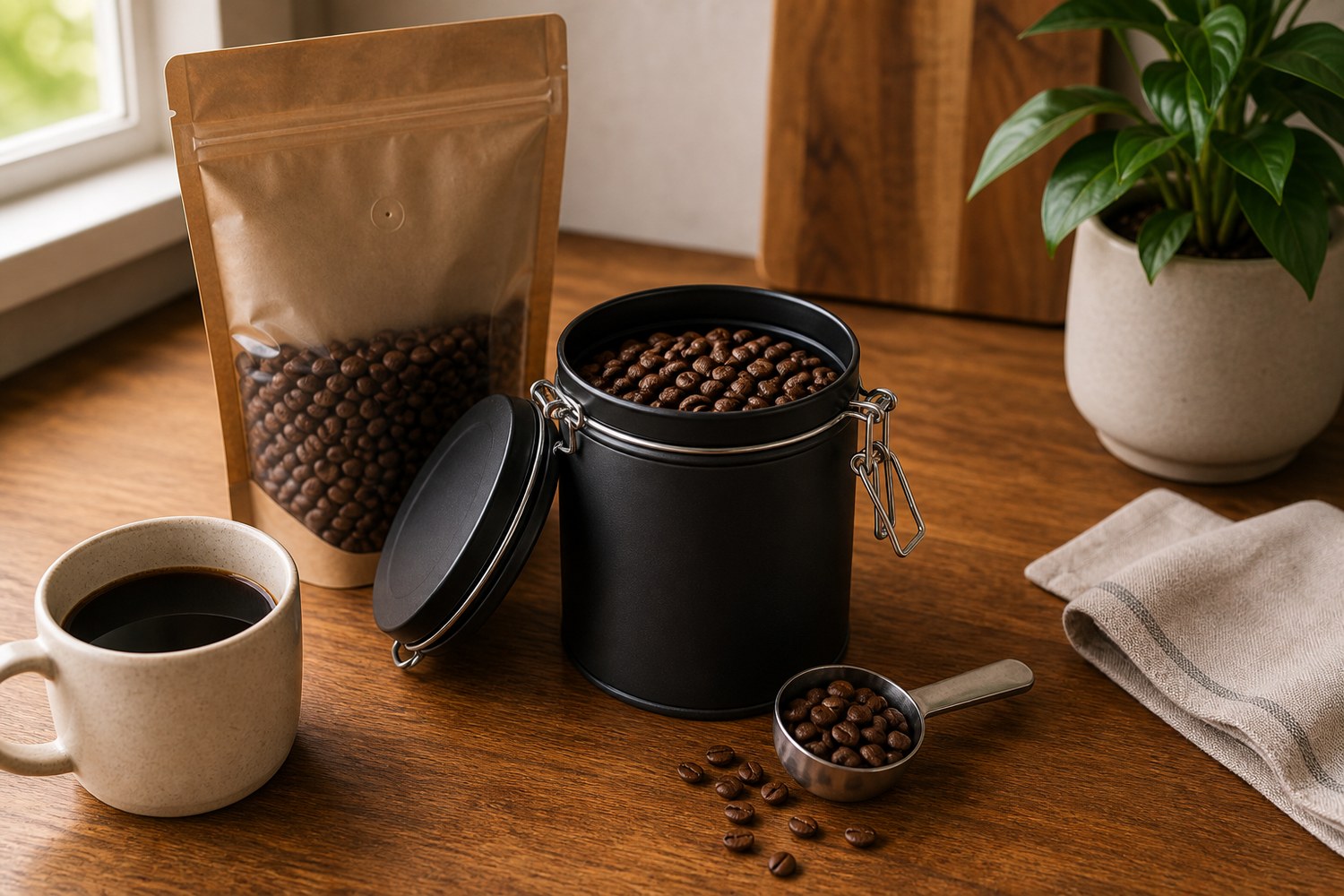
You’ve invested in great coffee beans – the last thing you want is for them to go stale before you finish the bag. Proper storage is key to maintaining flavor and aroma over time. In this guide, we’ll cover how coffee goes stale and offer best practices (and tools) for storing your coffee to keep it as fresh as possible, for as long as possible.
What Makes Coffee Go Stale?
The main enemies of coffee bean freshness are air (oxygen), moisture, heat, and light. Roasted coffee is full of delicate aromatic compounds and oils. Once roasted, beans start to release carbon dioxide (degassing) and are exposed to oxygen – which leads to oxidation of those flavorful oils. Over days and weeks, beans lose intensity and can taste flat or rancid as oils degrade. Also, coffee can absorb odors and moisture from the environment (it’s hygroscopic), which can introduce off flavors.
General Rule: Store coffee in a cool, dry, dark place in an airtight container. Aim to minimize contact with air.
Do’s and Don’ts of Coffee Storage:
- DO keep beans in an opaque, airtight container: Once you open that coffee bag, consider transferring the beans to an airtight canister if the bag isn’t resealable. Many specialty coffee bags come with a one-way valve and a ziplock – which is pretty good. Squeeze out excess air, seal it, and keep it stored away from sunlight. Even better, use a dedicated coffee storage canister with a tight seal (and one-way valve or vacuum mechanism). This keeps oxygen out and aromas in. Product Example: Fellow Atmos Vacuum Canister – it has a vacuum pump lid that removes air from inside, significantly slowing oxidation.
- DO keep beans cool but NOT in the fridge (for daily use): There’s a bit of myth around this. Fridge is not ideal because it’s humid and full of odors that coffee can absorb. Also, every time you take coffee in and out, condensation can form on cold beans – moisture = bad. A freezer, however, can be used for long-term storage (more on that below). Pantry or cupboard (away from the stove or any heat source) is fine.
- DON’T expose to light: Sunlight/UV can break down compounds in coffee (similar to how hops in beer skunk with light). So avoid transparent jars on the counter. Use opaque containers or store in a dark cabinet.
- DON’T buy more coffee than you need for a few weeks: This is key. The best storage is simply not to have coffee sitting around for months. Try to buy quantities that you’ll use within 2–4 weeks of roast (whole bean). For ground coffee, the window is even shorter – ground coffee can stale noticeably within 1-2 weeks or even days, since grinding exponentially increases surface area exposed to oxygen. So if possible, buy whole bean and grind fresh. If you must store ground, definitely use an airtight container and perhaps a smaller size to reduce how much air is in the container with the coffee.
What about Freezing Coffee?
Freezing can significantly slow down staling by essentially putting the beans in hibernation. Many coffee pros freeze beans (especially large quantities or rare beans) to preserve them. But you must do it properly:
- Portion coffee into small airtight bags (vacuum sealed if possible, or very well sealed with most air removed). Portions should be the amount you’d use in, say, a week or the size of one brew batch (e.g., 20g doses or 100g mini bags).
- Freeze quickly. When ready to use, do not open until it’s at room temp to avoid condensation on the beans. Alternatively, some people grind straight from frozen (this can actually improve grind consistency slightly and you avoid condensation by immediate grinding).
- Once thawed, don’t refreeze. So that’s why portioning is important – you only thaw what you’ll use fairly soon.
Freezing is great if you bought way too much coffee or want to save some special beans. But for your day-to-day coffee that you’ll drink within 2-4 weeks, it’s usually unnecessary if you store it well at room temp. Freshness experts like Scott Rao suggest that properly frozen coffee (unopened, vacuum-sealed) can taste almost as fresh months later as the day it was frozen. But again, moisture is the risk – hence the need for truly airtight packaging and caution when thawing.
Storage Containers & Tools:
- Vacuum Sealed Canisters: (e.g., Fellow Atmos or EVAK containers). These are among the best for countertop storage. They remove air, plus are opaque. Just remember to occasionally clean them and ensure the seal remains good.
- One-Way Valve Bags: The original bag your coffee came in often has a one-way valve that lets CO₂ out but no air in. These are fine for short term if you roll and clip them. Just push as much air out as you can before sealing.
- Mason Jars with Tight Lids: In a pinch, a mason jar works if kept in the dark. Fill it to the top to minimize air. Not as good as vacuum, but okay for a week or two of use.
- Desiccant Packs/Oxygen Absorbers: Not commonly needed for coffee, but sometimes people toss a food-safe oxygen absorber in with beans to scavenge any O₂. Could help, but if your container is truly sealed and you drink coffee fairly quickly, not mandatory.
- Avoid Grinder Hopper Storage: Don’t store beans openly in the grinder hopper for days on end, especially if it’s not airtight. It’s tempting for convenience, but those beans are exposed to air constantly. Instead, measure what you need per brew (single-dose) or only keep a small amount in the hopper that you’ll go through in a day or two.
Signs Your Coffee Has Gone Stale: The aroma is weak (opens bag and instead of a strong delicious smell, it’s faint or cardboard-like). Brewed cup tastes flat, with a papery or woody note, lacking sweetness and definition. Dark roasts might taste especially ashy bitter without any nuanced flavors. If you notice this, check your roast date – it’s likely 2+ months old or was stored poorly. At that point, you can still technically drink it (it won’t make you sick), but it won’t be enjoyable. Consider repurposing stale coffee for uses like baking (espresso brownies!) or as a deodorizer in your fridge, and treat yourself to a fresh bag.
How Long Do Beans Last? For best flavor, use:
- Light/medium roast: within ~3-4 weeks of roast is ideal (some say peak is 1-3 weeks). They can start losing vibrancy after a month or so.
- Dark roast: maybe within ~2-3 weeks; dark roasts can stale faster due to more surface oils (these oils oxidize and can go rancid). If you see oil, that’s flavor on the outside being exposed – a reason to store them even more carefully, as those oils in contact with oxygen accelerate flavor loss.
- Ground coffee: use within 1 week ideally, or at most 2 weeks if stored airtight. Ground coffee loses significant aroma even after 15 minutes in open air, so keep it sealed tightly always.
Summary of Best Practice: Buy fresh, keep coffee airtight in a cool dark place, only grind right before brewing, and buy in amounts you’ll finish in a few weeks. If you do that, you’ll always enjoy your coffee at or near its peak flavor. Using a quality airtight container is a small investment that pays off in that last cup tasting as good as the first from the bag.
Lastly, don’t refrigerate or freeze for daily use beans – it complicates things and risks moisture exposure. But do consider freezing sealed spare beans you won’t get to soon. By treating your beans well, you honor the work from farm to roast and get the maximum enjoyment from each precious batch of coffee. Freshness in = flavor out!