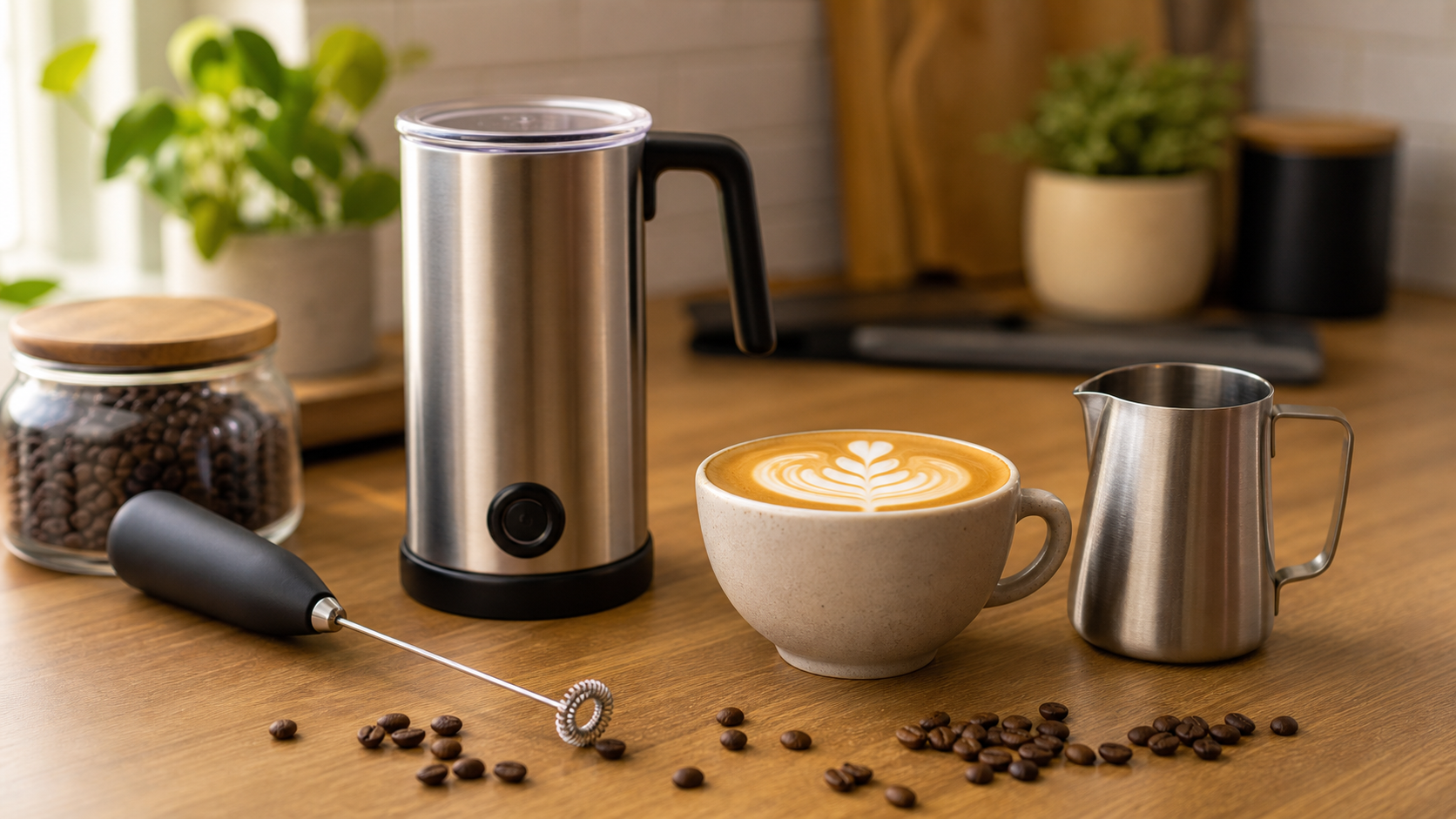
You do not need a full espresso setup to make better milk drinks at home. The right milk frother can help with cappuccinos, lattes, hot chocolate, matcha, cold foam, and simple latte art practice. The best choice depends on whether you want push-button convenience, a cheap handheld tool, or more control over texture.
This guide focuses on beginner-friendly frothers and milk tools that make sense for daily home coffee routines.
Quick Picks
| Pick | Best For | Milk Style | Why Beginners Like It | Link |
|---|---|---|---|---|
| Breville Milk Cafe | Best premium electric frother | Hot milk foam and hot chocolate | Pitcher-style design and easy controls | Check Amazon |
| Nespresso Aeroccino 4 | Best compact electric frother | Hot foam, cold foam, latte milk | Small footprint and push-button milk options | Check Amazon |
| Instant Milk Frother | Best budget electric frother | Hot and cold foam | Simple appliance-style workflow at a lower price | Check Amazon |
| Zulay Handheld Milk Frother | Best cheap handheld pick | Foam topping and quick mixing | Very affordable and easy to store | Check Amazon |
| Subminimal NanoFoamer | Best for latte art practice | Fine microfoam | More control than basic handheld frothers | Check Amazon |
How to Choose a Milk Frother
The best milk frother is not always the most powerful one. For beginners, convenience and cleanup matter just as much as foam volume. A push-button electric frother is easiest for daily drinks, while a handheld frother is cheaper but less consistent. If latte art is the goal, look for tools that create finer microfoam rather than big dry bubbles.
Electric vs. Handheld Frothers
Electric frothers heat and froth milk in one container. They are convenient, repeatable, and good for anyone who wants a latte without learning steam wand technique. Handheld frothers are inexpensive and tiny, but they usually make foam on top of warmed milk instead of fully textured milk.
Hot Foam vs. Cold Foam
If you drink iced lattes or cold brew, cold foam support is useful. If you mostly make hot cappuccinos and hot chocolate, focus on heating performance, pitcher capacity, and cleanup.
Best Premium Electric Frother
Breville Milk Cafe
The Breville Milk Cafe is a strong pick for people who want an appliance-style frother with a pitcher design. It is more expensive than many compact frothers, but it feels like a better fit for households that make milk drinks often.
Choose it if you want easier hot milk drinks and hot chocolate. Skip it if you only need occasional foam for one cup.
Best Compact Electric Frother
Nespresso Aeroccino 4
The Nespresso Aeroccino 4 is popular because it is compact, simple, and built around push-button milk options. It is a practical choice if you want hot foam, cold foam, and latte-style milk without taking up much counter space.
Choose it if you want a small dedicated frother. Skip it if you need a larger pitcher for multiple drinks at once.
Best Budget Electric Frother
Instant Milk Frother
The Instant Milk Frother is a useful budget-minded electric option for beginners who want hot or cold foam without spending premium-frother money. It is especially appealing for casual lattes, cappuccinos, and cold foam drinks.
Choose it if value and convenience matter most. Skip it if you want the most refined milk texture possible.
Best Cheap Handheld Pick
Zulay Handheld Milk Frother
A handheld frother is the cheapest way to improve milk drinks. It works well for quick foam topping, mixing powders, and travel-friendly coffee routines. The tradeoff is that texture is less consistent than an electric pitcher frother.
Choose it if you want the lowest-cost upgrade. Skip it if you expect cafe-style microfoam.
Best for Latte Art Practice
Subminimal NanoFoamer
The Subminimal NanoFoamer is aimed at people who care more about microfoam texture and latte art practice than basic foam volume. It takes more technique than a push-button frother but gives you more control.
Choose it if you want to practice finer milk texture. Skip it if you want the easiest possible workflow.
Common Beginner Mistakes
- Expecting every frother to make latte art milk. Big airy foam is not the same as glossy microfoam.
- Overfilling the pitcher. Milk expands as it froths, and overfilling creates mess.
- Ignoring milk type. Whole milk is usually easier, while some plant milks need barista blends.
- Letting milk dry inside the frother. Clean it right away for better performance and less residue.
- Buying a frother when you really need a steam wand. If you want true cafe-style texture, an espresso machine steam wand gives more control.
What Should You Buy First?
If you want an easy everyday frother, start with a compact electric model like the Nespresso Aeroccino 4 or Instant Milk Frother. If you want a more premium hot milk setup, look at the Breville Milk Cafe. If latte art practice is the priority, a NanoFoamer-style tool and a good milk pitcher make more sense.
If you are building a full milk-drink setup, pair this guide with our articles on beginner espresso machines and beginner coffee grinders.
FAQ
What is the best milk frother for beginners?
For most beginners, a compact electric frother is easiest because it heats and froths milk with minimal effort. Handheld frothers are cheaper, but they require more manual control and usually create less consistent texture.
Can a milk frother make latte art?
Some frothers can help, but latte art needs fine microfoam rather than stiff foam. A steam wand is best, while specialty handheld microfoam tools can be useful for practice.
Do milk frothers work with oat milk?
Yes, but results vary. Barista-style oat milk usually froths better than standard oat milk because it is formulated for coffee drinks.
Is an electric milk frother worth it?
It is worth it if you make milk drinks often and want less mess than heating milk separately. If you only make an occasional drink, a handheld frother may be enough.